The Six-Hour Phone Call That Changed Fortnite Forever: How Thanos Broke Epic's Crossover Resistance
Marvel's Thanos and the Infinity Gauntlet revolutionized Fortnite, merging iconic pop culture with thrilling gameplay in a historic collaboration.
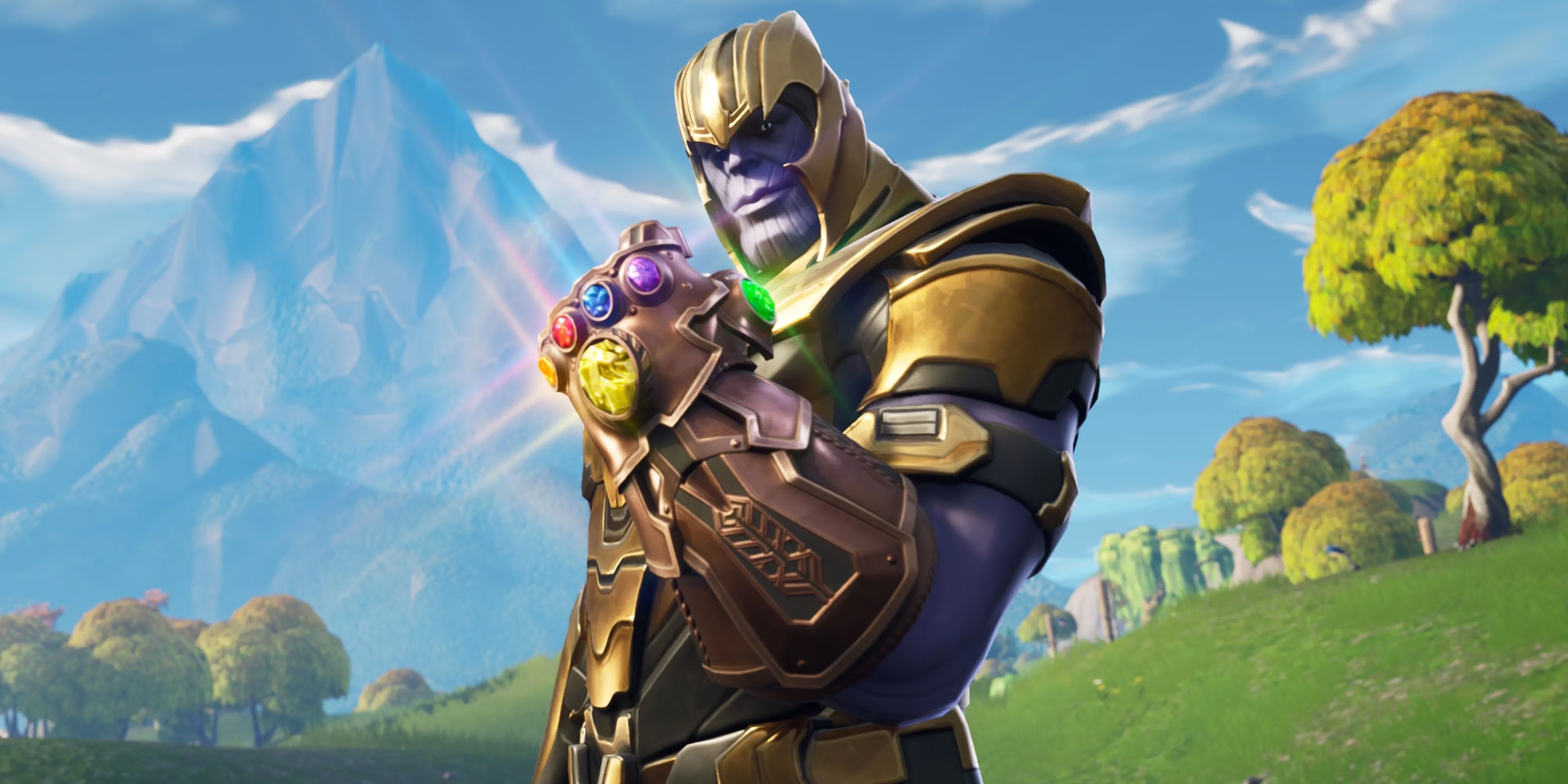
In 2025, it's almost impossible to imagine a Fortnite that isn't a vibrant, ever-changing tapestry of pop culture icons. From Kratos to Ariana Grande, from Master Chief to Goku, the island has become a digital metaverse where fandoms collide. But this reality, now taken for granted by millions of players, very nearly didn't exist. The foundational philosophy at Epic Games was once staunchly isolationist. The idea of "putting outside characters into Fortnite" was met not with excitement, but with a firm and resounding rejection. This stance set the stage for one of the most pivotal conversations in modern gaming history: a six-hour phone call that would dismantle Epic's resistance and usher in a new era.
The year was 2018, and the Marvel Cinematic Universe was building to its unprecedented climax with Avengers: Infinity War. Directors Anthony and Joe Russo, alongside their production partner Pete Wanat of AGBO, saw a unique synergy between their universe-ending narrative and the world's most popular battle royale. They approached Epic Games with a proposal: bring Marvel's heroes and villains to the island. The response was shocking. An Epic executive delivered a blunt refusal: "We are not interested in putting outside characters into Fortnite." Here was the studio behind the biggest game on the planet, presented with a collaboration with the biggest movie franchise in history, and their answer was a flat "no." The cultural behemoth that Fortnite would become was still just a glimmer of potential, stifled by an internal reluctance to dilute its own identity.
Yet, the Russos and Marvel were persistent. They secured what was supposed to be a brief, 30-minute audience with Epic's then-Chief Creative Officer, Donald Mustard. The goal was simple: change his mind. What transpired was anything but a half-hour chat. The conversation stretched into a marathon negotiation and creative brainstorming session that lasted nearly six hours. Pete Wanat later revealed that this epic call was the catalyst that "got the ball rolling and changed everything." Mustard and the Russo brothers debated, envisioned, and ultimately crafted a pitch so compelling it convinced Epic's top brass to take a monumental risk.
The fruit of that labor was the Infinity Gauntlet Limited Time Mode (LTM), which debuted in 2018 and is still fondly remembered as one of Fortnite's most inventive and thrilling experiences. The mode was a masterpiece of thematic integration:
-
The Mad Titan's Arrival: Thanos himself descended onto the island as a playable character.
-
The Ultimate Power Fantasy: A single Infinity Gauntlet would spawn on the map. The player who claimed it transformed into Thanos, gaining devastating powers like a massive punch and a destructive laser beam.
-
A Coordinated Hunt: The other 99 players weren't defenseless. Scattered across the map were iconic MCU weapons to help them fight back:
-
Captain America's Shield 🛡️
-
Iron Man's Repulsor Blasts ✋
-
Hawkeye's Bow 🏹
-
The entire match became a chaotic, glorious scramble for ultimate power or a desperate alliance to stop it. The mode was a runaway success, proving that crossovers could be more than cheap cosmetics—they could be transformative gameplay events that captured the essence of the collaborating franchise.
Looking back from 2025, the Thanos crossover was the first domino in a chain reaction that reshaped the entertainment landscape. The resounding success of the Infinity Gauntlet LTM shattered Epic's initial hesitation. It demonstrated a powerful new formula: Fortnite wasn't just a game; it was a platform for live, interactive cultural events. The floodgates opened, and the crossovers began in earnest.
| Era | Notable Crossovers | Impact |
|---|---|---|
| The Pioneers (2018-2020) | Marvel (Thanos, Avengers), DC (Batman), Star Wars | Proved concept, established event-based gameplay. |
| The Expansion (2021-2023) | Naruto, Dragon Ball, Attack on Titan, Icon Series (Musicians/Athletes) | Broadened to global anime and real-world icons, focusing on cosmetics. |
| The Metaverse (2024-Present) | Grand Theft Auto, Assassin's Creed, Major Film Promotions | Deep integration, often with new gameplay mechanics and map changes. |
Today, the list of collaborations is staggering. Fortnite has seamlessly integrated characters from virtually every corner of entertainment:
-
Gaming Legends: Kratos & Atreus, Master Chief, Aloy, Solid Snake, Lara Croft.
-
Anime & Comics: Goku, Vegeta, Itachi Uchiha, Spider-Man (across multiple iterations), Wolverine.
-
Cinema & TV: John Wick, Rick Sanchez, Darth Vader, The Mandalorian.
-
The Icon Series: A whole category dedicated to real-world stars like Travis Scott, LeBron James, and J Balvin, who have hosted in-game concerts and events.
Fortnite has effectively become the de facto crossover platform, a digital town square where brands and artists need to have a presence. The power dynamic has completely flipped. Where Epic once said "no" to Marvel, companies now actively pitch collaborations to Epic, eager to tap into its massive, engaged audience. The game's identity is now inextricably linked to this ever-evolving roster of guests.
However, one major holdout remains, a final domino that has yet to fall: Nintendo. Rumors and reported negotiations have swirled for years, particularly concerning iconic characters like Samus Aran from Metroid. The stalemate reportedly stems from Nintendo's famously protective stance over its IP. A key point of contention was allegedly Nintendo's desire for its characters, like Samus, to appear exclusively on the Nintendo Switch version of Fortnite—a condition antithetical to Fortnite's core cross-platform philosophy. In an age where Master Chief can dance on a PlayStation and Kratos can battle on an Xbox, Nintendo's walled garden remains the most prominent exception to Fortnite's rule of universal inclusion.
It all traces back to that one phone call. A six-hour conversation that challenged a core studio belief and opened a door Epic didn't even know it wanted to walk through. The introduction of Thanos wasn't just the addition of a villain; it was the proof of concept for a new kind of live-service game. It showed that a game could be a living, breathing event calendar for global pop culture. The reluctant "yes" from Epic's bosses in 2018 set Fortnite on a path to become less of a mere game and more of a persistent digital event space, a status it firmly holds in 2025. The Mad Titan's quest to wipe out half the universe ironically ended up helping build one of the most inclusive and collaborative universes in gaming.