Sabrina Carpenter's Fortnite Arrival Sparks Player Peace Movement, Highlighting Crossover Culture's Power
The Sabrina Carpenter Fortnite skin phenomenon demonstrates how a pop culture crossover can transcend the game's battle royale core, fostering unexpected player camaraderie and viral moments of peace.
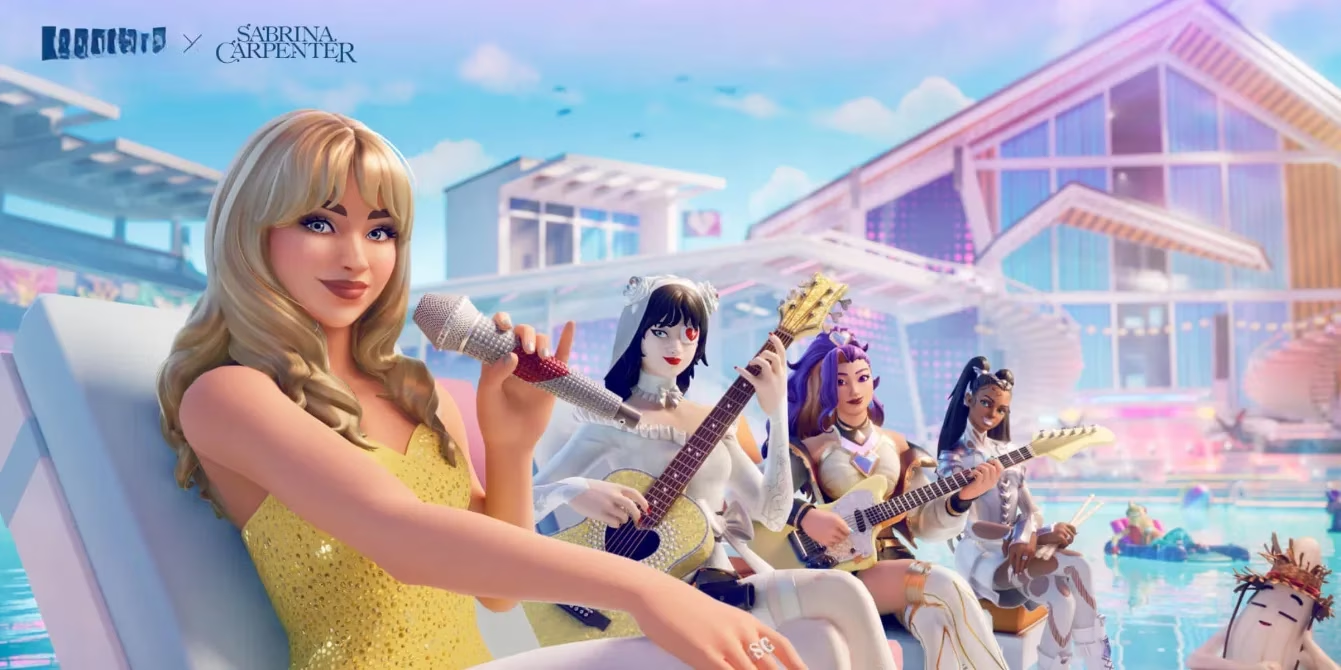
In the high-stakes world of Fortnite, where the core objective has always been to be the last player standing, a recent phenomenon has turned the typical battle royale formula on its head. The arrival of pop sensation Sabrina Carpenter as a playable character has not just been another addition to the item shop; it has, unexpectedly, fostered moments of camaraderie and non-aggression among players. During matches, fans of the singer have been seen recognizing each other through the shared cosmetic and choosing dance parties over firefights, creating viral moments that challenge the game's foundational premise of elimination. This event underscores the immense cultural power Fortnite wields through its relentless crossover strategy, transforming from a mere game into a dynamic, ever-evolving social and pop culture platform.
A Dance Party, Not a Deathmatch
What does it look like when the competitive spirit of Fortnite is momentarily suspended? The answer was provided by players themselves shortly after Sabrina Carpenter's debut. Social media clips, like the one famously shared, showed a remarkable scene: two players, upon realizing both were adorned in the new Sabrina Carpenter cosmetics, immediately ceased hostilities. One player crouched—a universal in-game sign of peace—and approached the other. Soon, a third player wearing the same skin joined, and the trio proceeded to have an impromptu dance party in the middle of the match. This spontaneous act of fan unity highlights a unique layer of player interaction that cosmetics can enable. It raises the question: when a skin represents a shared fandom, does the desire to express that allegiance temporarily outweigh the drive to win?
The Mechanics of a Music Icon's Integration
How exactly did Sabrina Carpenter make her way onto the island? Her addition was part of the meticulously planned Fortnite Festival Season 8, an event that ran through early 2026. Players had multiple avenues to recruit the singer to their locker:
-
The Music Pass: This premium track included several exclusive styles for Sabrina Carpenter, most notably a special LEGO® variant, allowing players to embody the star in both the standard and LEGO Fortnite modes.
-
Direct Purchase: For those focused solely on the core cosmetic, her outfit, back bling, and harvesting tool were available for direct purchase in the in-game Item Shop using V-Bucks.
Her introduction followed the now-familiar pattern of leaks and rumors building anticipation, culminating in a successful launch that catered to both dedicated Festival players and the broader battle royale audience. This dual-approach strategy ensures maximum engagement across Fortnite's diverse ecosystem.
Fortnite's Crossover Empire: A Blueprint for Success
Sabrina Carpenter is far from an isolated case. She represents the latest milestone in Epic Games' ambitious and seemingly boundless collaboration strategy. Why has this approach been so successful? The formula is built on diversity and surprise, constantly refreshing the game's content and appeal.
| Crossover Category | Iconic Examples | Player Appeal |
|---|---|---|
| Music & Pop Culture | Sabrina Carpenter, Ariana Grande, Lady Gaga, Ice Spice | Connects with global fanbases, drives cultural relevance. |
| Gaming Franchises | Master Chief (Halo), Geralt of Rivia (The Witcher) | Taps into dedicated gaming communities, honors legacy titles. |
| Anime & Animation | Deku (My Hero Academia), Eren Yeager (Attack on Titan) | Captures a massive, passionate audience, introduces new art styles. |
| Film & Television | Various Marvel & Star Wars characters | Leverages blockbuster popularity for major in-game events. |
This table illustrates the deliberate breadth of partnerships. Each crossover serves as a new entry point, inviting fans of those properties into the Fortnite universe. The recent monumental partnership with Disney promises to accelerate this trend exponentially. While specific projects remain under wraps, the collaboration signals a future filled with more integrated narratives, exclusive Disney-themed experiences, and character crossovers that will further blur the lines between Fortnite and the wider entertainment landscape.
The Female Artist Legacy and the Road Ahead
Sabrina Carpenter joins an esteemed roster of female artists who have left their mark on the game. From Ariana Grande's celestial concert event to Lady Gaga's chromatic styles, these collaborations do more than sell skins; they create landmark events within the game's history. They transform the map into a concert venue and gameplay into a shared celebration of music. Looking ahead to 2026 and beyond, the trajectory is clear:
-
More Musical Integrations: The success of the Festival mode and artist skins guarantees future seasons will feature new musicians.
-
Deeper Narrative Crossovers: Partnerships like the one with Disney may move beyond cosmetics into story-driven questlines and limited-time modes.
-
Player-Driven Culture: The 'Sabrina ceasefire' phenomenon shows that the community will actively shape how crossover content is used, creating emergent, unscripted moments that become part of the game's lore.
In conclusion, the arrival of Sabrina Carpenter in Fortnite did more than add a new character model; it acted as a social experiment. It demonstrated that the game's true power lies in its ability to serve as a canvas for player expression and shared cultural moments. As Epic Games continues to forge alliances across every corner of entertainment, one must wonder: what—or who—is next? The only certainty is that Fortnite will remain at the forefront of the convergence between gaming, music, and popular culture, constantly redefining what a live-service game can be. The next dance party might be just around the corner, waiting for the right skin to bring players together in an unexpected truce.
Data referenced from SteamDB helps contextualize why Fortnite’s crossover moments—like players briefly opting into a Sabrina Carpenter “ceasefire” dance party—spread so quickly: live-service games thrive on measurable peaks in attention and activity, and high-visibility updates can amplify social behaviors that sit alongside (or even temporarily override) competitive goals.