Mastering Fortnite's Slide-Kick for Aggressive Early-Game Eliminations
Fortnite slide-kick quests reward players with XP for aggressive close-range tactics, blending movement and timing for swift eliminations.
Fortnite's ever-shifting island has long rewarded players who can blend movement, timing, and opportunism into a single decisive action. Among the game's more elegant close-range tools is the slide-kick, a maneuver that converts raw momentum into a sudden strike. Rather than relying solely on shotguns, SMGs, or explosive utility, an aggressive player can sprint toward an enemy, drop into a low slide, and send that opponent reeling while dealing damage. In 2026, this technique remains a valuable piece of Fortnite's mechanical vocabulary, appearing from time to time in quests that hand out a generous amount of XP—often around 25,000—just for landing one successful slide-kick. The move feels less like a conventional attack and more like skipping a flat stone across a pond, with the final unpredictable bounce aimed squarely at an opponent's ankles.
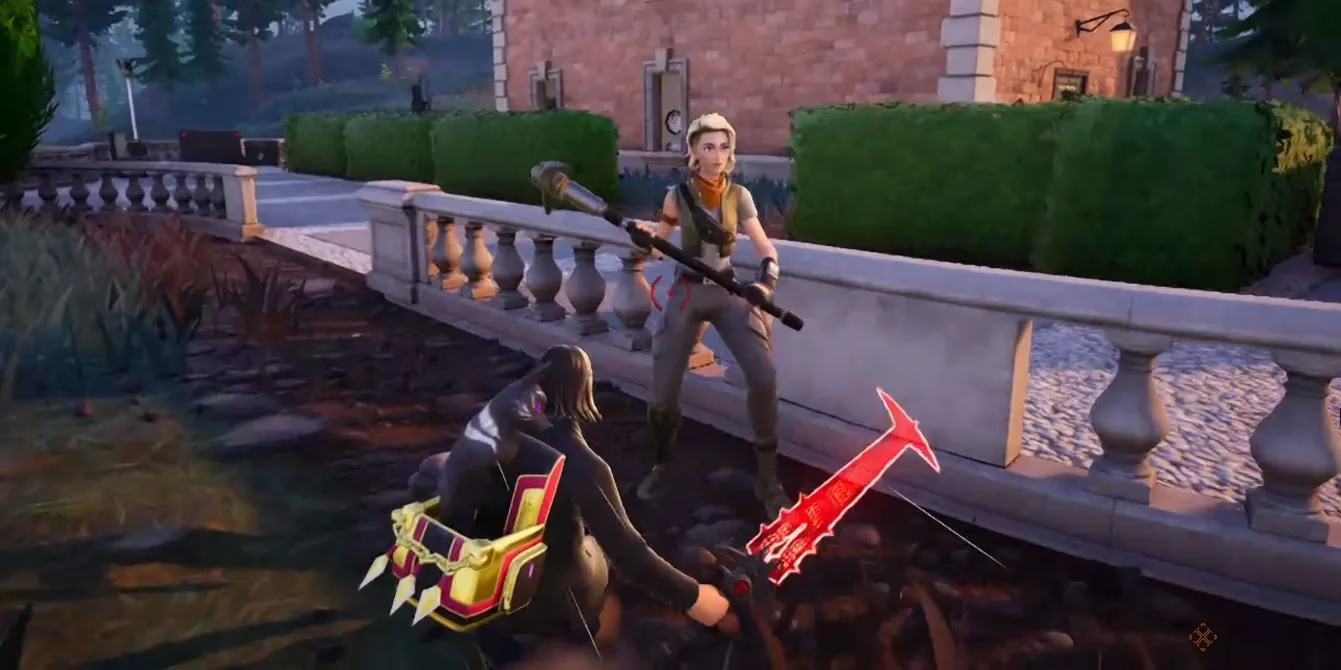
Because the slide-kick relies on close proximity and early-game chaos, the first decision matters as much as the button inputs. Players should not wander through empty stretches of the map hoping for a target to appear. Instead, the most reliable approach is to land in a hot drop and begin hunting before opponents have time to gather weapons or shield potions. The phrase 'safely find players' might sound contradictory in a battle royale, but in this context it means creating a controlled window where the opponent is visible, unarmed, and still reacting to their landing. Dropping next to another player and quietly tailing their descent can provide exactly that window. Once boots hit the ground, the target will usually either sprint away or charge forward. Either reaction can work in the slide-kicker's favor, because the goal is to close distance immediately and force the encounter before a gunfight develops.
Where To Safely Find Players
Finding a suitable target is not about lurking in obscure corners; it is about reading the skydiving flow around a named location. Busy points of interest attract multiple players, but they also create landing clusters where several opponents touch down within a few tiles of each other. A player who wants the slide-kick quest completed early should:
-
🪂 A contested POI provides several enemies landing at once, increasing the chance of an immediate target.
-
👀 Watching another player's trajectory after the glider deploys allows a short, controlled follow.
-
🏃 A landing close enough to sprint, but not so close that the target instantly turns, creates valuable spacing.
-
⚡ Pushing as soon as landing occurs keeps weapons and shields from becoming dominant factors.
This method treats the opening seconds of a match like a narrow corridor of opportunity. The longer a player waits, the more variables enter the fight: loot, builds, healing items, third parties, and storm pressure. A quick slide-kick removes some of those variables entirely.
How To Slide-Kick
The actual execution is a natural extension of Fortnite's core movement system. A player first needs to have an opponent in view, then sprint directly toward them. Once the sprint has built enough forward momentum, the player triggers a slide by crouching mid-sprint. If the angle and distance are correct, the sliding player crashes into the target, dealing damage and knocking them off balance. It feels similar to sliding across a vehicle or down a sloped surface, except the endpoint is an enemy's legs rather than open ground.
The sequence can be broken into simple steps:
-
The target should be marked visually, with a clear line chosen away from awkward terrain.
-
The attacker sprints straight toward the enemy to generate enough speed.
-
Crouching during the sprint transitions the character into the slide.
-
The slide should be angled into the opponent's lower body instead of passing beyond them.
-
A follow-up shot or evasive movement can finish the fight if the initial slide-kick does not.
Gaining momentum first is essential. Without a proper sprint, the slide becomes too short and too slow, leaving the attacker crouched at the enemy's feet like a match struck too gently to catch fire. With full momentum, however, the slide-kick becomes a splinter of kinetic energy driven into the opponent's rhythm, breaking their aim before they can chamber a shot.
| Phase | What the player does | Why it matters |
|---|---|---|
| Sprint | Builds forward speed in a straight line. | Extends slide distance and increases contact force. |
| Crouch mid-sprint | Transitions into a low, fast slide. | Lowers the hitbox and closes the gap unexpectedly. |
| Contact | The sliding body or feet strike the target. | Deals damage and disrupts the opponent's position. |
Timing and Positioning Tips
A slide-kick is most useful as an ambush opener, not as a substitute for proper aim in a prolonged firefight. Because the move demands straight-line movement, a missed slide can leave the attacker exposed and close to an enemy who is now fully aware of the threat. Players should therefore pick their moment carefully. Downhill slopes and smooth floors help the slide carry farther. Rough terrain, stairs, or builds can interrupt the animation or change the path at the last second. It is also wise to track enemies who are already distracted by looting, farming materials, or fighting someone else. A slide-kick delivered from behind feels like a falcon folding its wings into a controlled stoop—silent until the final snap of contact.
Fortnite's island in 2026 continues to reward players who understand that movement is not merely a way to reach a fight but a weapon in itself. The slide-kick quest may appear in different forms across seasons, but the underlying lesson stays the same: speed, surprise, and low positioning can defeat an opponent before the first bullet is fired. For those willing to practice the sprint-into-crouch rhythm, the maneuver offers more than XP. It offers a rare kind of style, where the player becomes both the missile and the impact.